


Fire Retardant Curtains, In the demanding world of high-end hospitality and large-scale commercial developments, safety and aesthetics are no longer separate concerns. As visionary giga-projects under Saudi Vision 2030 redefine global luxury standards, the pressure on developers, architects, and hotel operators to deliver flawless interiors has reached its peak. Within this high-stakes environment, the procurement of Fire Retardant Curtains has transitioned from a simple decorative task to a critical engineering decision. These specialized window treatments serve as the primary shield against the rapid spread of flames, providing essential protection for lives and property while maintaining the high aesthetic standards required for five-star environments.
Fire Retardant Curtains
Choosing the right partner for window solutions is a move toward long-term asset protection. Relying on standard textiles in a commercial setting is a risk that luxury operators and real estate developers simply cannot afford. This guide addresses the technical superiority, legal necessity, and aesthetic evolution of modern Fire Retardant Curtains, explaining why they are the definitive choice for professionals steering the region’s most prestigious projects.
Why Fire Safety is the Foundation of Luxury Hospitality
A successful commercial fit-out depends on the perfect alignment of various professional priorities. Different stakeholders look at window treatments through different lenses, but the necessity for certified Fire Retardant Curtains remains the common denominator. In a public building where hundreds of guests sleep, the speed of fire spread is the difference between an incident and a catastrophe.
Architects and interior designers are the visionary heart of any project. They strive to create immersive environments that communicate a unique brand identity. Historically, designers were often restricted by the technical limitations of fire-rated materials, which were perceived as stiff or aesthetically unappealing. However, modern manufacturing has changed this dynamic. Today’s Fire Retardant Curtains offer a nearly infinite spectrum of textures, intricate weaves, and bespoke patterns. Creative professionals now have the freedom to specify rich velvets or delicate sheers, knowing the material is engineered to resist flame spread without compromising on the tactile quality that defines luxury.
Technical Engineering: Inherent vs. Treated Protection
To make an informed procurement decision, it is essential to understand that not all fire-resistant materials are manufactured using the same technology. The performance and longevity of Fire Retardant Curtains depend heavily on their molecular structure. There are two primary categories in the industry: Treated and Inherent.
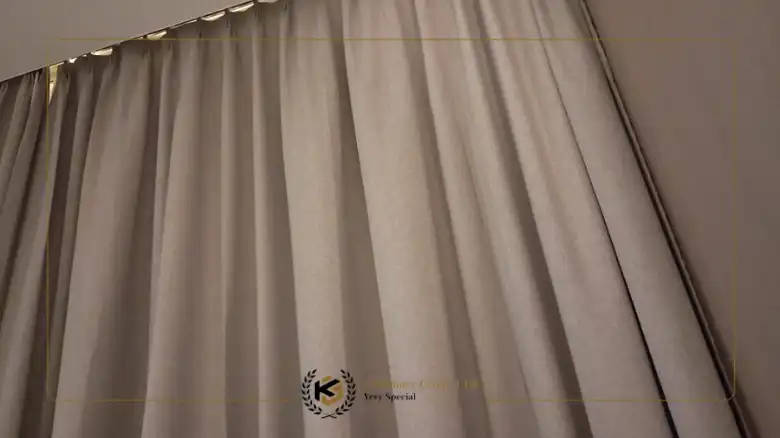
Treated fabrics are standard textiles that have been coated with a fire-retardant chemical after the weaving process. While initially effective, this topical treatment is temporary. It can wear off through friction, degrade under the intense UV radiation of the Middle East, or wash out during industrial laundering. On the other hand, the highest industry standard involves Fire Retardant Curtains made from inherent fibers, such as the world-renowned Trevira CS. In these materials, the flame-retardant properties are built directly into the molecular structure of the yarn itself. This ensures that the protection is permanent and will last for the entire lifecycle of the product, regardless of how many times it is cleaned or handled.
Understanding Global Safety Certifications
A claim of safety is only as valuable as the laboratory report backing it up. Professional-grade Fire Retardant Curtains must pass rigorous destructive testing to be deemed fit for commercial use. There are several key benchmarks that every project manager and interior designer should recognize:
- NFPA 701 (USA): The most common requirement for public spaces, measuring flame spread and dripping.
- BS 5867 (UK): A rigorous British standard frequently cited in regional hospitality tenders.
- EN 13773 (Europe): A comprehensive European standard that ensures high-level performance and reliability.
Securing Fire Retardant Curtains that meet these global benchmarks provides a universal guarantee of quality that stakeholders and insurers can trust without question.
Operational Efficiency and ROI for Hotel Managers
For hotel operations directors, the physical property is a high-traffic machine that must perform flawlessly every day. They judge the success of a material by its durability and the ease with which housekeeping teams can maintain it. Investing in high-performance Fire Retardant Curtains upfront is a proactive strategy to lower the total cost of ownership.
Standard residential fabrics often lead to rapid fading and structural thinning, requiring frequent replacement. High-quality Fire Retardant Curtains are engineered to withstand the rigors of frequent industrial laundering and intense sunlight. When window treatments maintain an opening-day freshness for years, the property enjoys a significantly higher return on investment (ROI). Furthermore, many contemporary fabrics are treated with soil-repellent finishes, reducing the frequency of deep cleaning and allowing rooms to be turned over faster.
Specialized Solutions for Healthcare and Clinical Wards
The demand for high-end safety materials has expanded beyond hotels into the luxury healthcare sector. VIP hospital wards and wellness clinics now require environments that feel residential rather than clinical. In these settings, Fire Retardant Curtains are essential for providing a safe sanctuary for patients with limited mobility.
Modern medical textiles often combine fire retardancy with antimicrobial properties, creating a dual-layered defense that supports both fire safety and infection control protocols. Sourcing specialized Fire Retardant Curtains for healthcare ensures a hygienic, safe environment that aids patient recovery while maintaining the premium aesthetic expected in world-class clinics.
Thermal and Acoustic Insulation Properties
In the intense heat of the Gulf region, window treatments serve as a vital layer of the building’s thermal skin. High-specification Fire Retardant Curtains can act as thermal barriers, reflecting external heat and reducing the load on HVAC systems. Additionally, heavy-duty drapes provide acoustic benefits, absorbing sound waves to create the quiet, hushed atmosphere that guests associate with elite luxury.
Why ElKafoury Group is the Trusted Regional Partner
Finding a strategic partner who understands the intersection of aesthetic luxury and rigid technical engineering is rare. Since 1996, ElKafoury Group has stood as the definitive resource for premium textiles and custom fit-outs across Saudi Arabia and the Middle East. We understand that in the luxury commercial sector, there is no room for technical ambiguity or logistical failure.
We do not merely supply raw yardage; we deliver a complete execution of your project’s technical requirements. Our reputation is built on delivering high-performance Fire Retardant Curtains that align with the rigorous Brand Standards of global operators like Hilton and Four Seasons. From the initial technical specification and design consultation to manufacturing in our specialized workshops and precise on-site installation, we handle the entire process.
Turnkey Excellence for Giga-Projects
Managing a project with hundreds or thousands of rooms requires a unified approach. Dealing with a firm that manages the entire scope ensures that the Fire Retardant Curtains installed in the first room are identical to those in the last. This batch consistency is vital for maintaining the brand’s visual integrity. At ElKafoury Group, our integrated model removes the logistical burden from procurement managers and guarantees that every element is compliant with international standards and ready for project handover.
Securing the Future of Your Property
The selection of interior materials is a definitive statement about a property’s standards and its commitment to guest welfare. It is an investment in the brand’s narrative, the efficiency of operations, and the long-term protection of the physical asset. Leaving the quality of your textiles to chance is a risk that luxury operators cannot afford.