


In the world of large-scale commercial projects, where a property’s reputation is inextricably linked to the safety and security of its occupants, certain technical specifications cannot be based on mere verbal promises or marketing claims. Fire resistance in textiles particularly in curtains and draperies which can cover vast surfaces and potentially act as a conduit for flames stands at the very top of this list. Here, it is not enough for a supplier to say, This fabric is fire retardant; they must prove it. The demand for Fire Retardant Fabric Certifications is not a routine procedure; it is the primary line of defense and the only true guarantee that separates verified safety from calculated risk.
Trusted, third-party certifications from independent international laboratories are the universal language understood and respected by safety engineers, insurance underwriters, and civil defense authorities. They are the tangible, physical evidence that a fabric has undergone rigorous testing and has proven its ability to resist ignition and slow the spread of fire according to strict global standards. To ignore the importance of these documents is to risk not just the physical investment, but lives and property. This guide will illuminate the critical importance of Fire Retardant Fabric Certifications and how to decode them to make an informed, safe, and responsible decision.
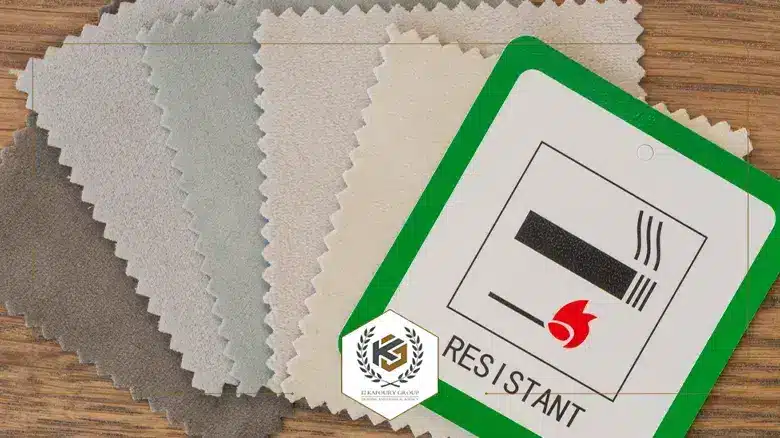
Who Cares About a Certificate? The Vital and Varied Perspectives
The insistence on procuring fabrics with accredited Fire Retardant Fabric Certifications stems from the different responsibilities and requirements that fall on each key decision-maker within a project’s ecosystem.
For the Developer & Project Owner
You are legally and ethically responsible for the safety of every individual who enters your property. In the unfortunate event of a fire, having accredited certifications proving you used compliant materials is your first and most critical legal defense. These documents protect your investment, facilitate insurance procedures, and enhance your project’s value and reputation as a safe, trustworthy environment. Insisting on the correct Fire Retardant Fabric Certifications is a cornerstone of risk management.
For the Procurement & Tenders Manager
Your mission is to ensure that what you purchase is exactly what was specified in the tender. The term fire retardant on its own is vague and subjective. However, when you demand Fire Retardant Fabric Certifications and specify the required standard codes (e.g., NFPA 701), you establish a clear, unequivocal benchmark that can be measured and verified. This ensures a fair comparison between suppliers and eliminates ambiguity.
For the Safety or Operations Manager
You are responsible for daily safety procedures and evacuation drills. Your confidence in the performance of the materials within your facility is vital. An accredited certificate gives you the assurance that, in an emergency, the curtains will perform as expected and will not act as fuel to accelerate a fire, thereby buying precious, life-saving time. Understanding Fire Retardant Fabric Certifications is part of your due diligence.
For the Architect & Interior Designer
While your focus is on the aesthetic, you have a professional responsibility to ensure the materials you specify are safe and compliant with all regulations. Specifying textiles with the appropriate Fire Retardant Fabric Certifications from the very beginning of the design phase ensures your creativity does not come at the expense of safety. It also prevents costly changes and delays in the later stages of the project.
The Global Standards You Need to Know
When you seek fabrics with Fire Retardant Fabric Certifications, you will encounter a series of codes and numbers. Here is a guide to the most important and internationally recognized standards that act as the global passport for safe textile applications in commercial spaces.
NFPA 701: The Leading American Standard
This standard, established by the U.S. National Fire Protection Association (NFPA), is the most widely recognized and specified test for vertical textiles like curtains and draperies. NFPA 701 certification for FR fabrics is the benchmark in many regions.
- What It Tests: It doesn’t just test if a fabric ignites. More importantly, it measures how long it takes for the flame to self-extinguish after the source is removed and the amount of flaming debris that drips from the fabric. The goal is to ensure the material will not contribute to spreading the fire downwards or across a room.
- Its Importance: Specifying fabrics with this certification is a mandatory requirement for most major commercial projects, hotels, and hospitals in North America and is widely adopted as the standard in the Middle East and beyond. It is one of the most crucial Fire Retardant Fabric Certifications to look for.
BS 5867 Part 2 Type B & C: The Rigorous British Standard
This British Standard is extremely stringent and is widely respected in Europe, the Middle East, and other regions that follow UK codes.
- What It Tests: The fabric is exposed to a flame for various durations (15, 20, 30 seconds). The standard is divided into two key performance levels for curtains and drapes:
- Type B: A high standard for use in hotels and offices. The test is performed on the fabric as received.
- Type C: The highest, most stringent standard, required for hospitals and healthcare facilities. It mandates that the fabric must still pass the test after undergoing 50 cycles of washing and drying.
- Its Importance: This is the go-to standard for projects requiring the utmost level of durability and performance, especially in the healthcare sector. BS 5867 certification for FR fabrics is a sign of superior quality.
EN 13773: The Harmonized European Standard
This is the unified European standard that classifies the fire behavior of curtains and drapes across the European Union.
- What It Tests: It classifies fabrics into different classes (Class 1 to 5) based on their reaction to flame. Class 1 represents the highest and safest level of performance.
- Its Importance: This standard is an essential reference for projects adhering to European building codes and ensures a high, reliable level of performance. It is a key certificate when comparing international Fire Retardant Fabric Certifications.
Choosing the right Fire Retardant Fabric Certifications for your project will depend on local building codes and specific project requirements.
ElKafoury Group: Your Partner in Documented Safety
At ElKafoury Group, with our deep-rooted experience since 1996, we understand that trust is the foundation of our client relationships. We know this trust is built on certainty and documentation, not just promises. This is why providing fabrics with accredited Fire Retardant Fabric Certifications is an inseparable part of our commitment to quality and safety. Our partnerships with hospitality leaders like Hilton and Four Seasons are built on this absolute confidence that our products meet and exceed the highest global standards.
- Complete Transparency and Documentation: We don’t just state that our fabrics are fire retardant. Upon request, we provide our clients with copies of the original test reports from neutral, third-party international laboratories, proving compliance with the required standards, whether it’s NFPA 701 certification for FR fabrics, BS 5867, or others. This is your documented guarantee.
- Focus on Permanent Solutions: We believe safety must be permanent. Therefore, we focus on providing fabrics made from inherently flame-retardant yarns (like Trevira CS). This ensures the FR properties will not be diminished by washing or aging, providing our clients with a safe, sustainable, and maintenance-free solution the gold standard of Fire Retardant Fabric Certifications.
- Integrated and Certified Solutions: By offering a comprehensive, turnkey furnishing service, we ensure that all textiles in your project, from curtains to upholstery, meet the same high level of documented safety standards. This integrated approach simplifies the process for project managers and grants them complete peace of mind.
Demanding Fire Retardant Fabric Certifications is not a bureaucratic complication; it is the most intelligent and responsible action to protect your project, your guests, and your future. It is the seal of quality that proves you have put safety first.